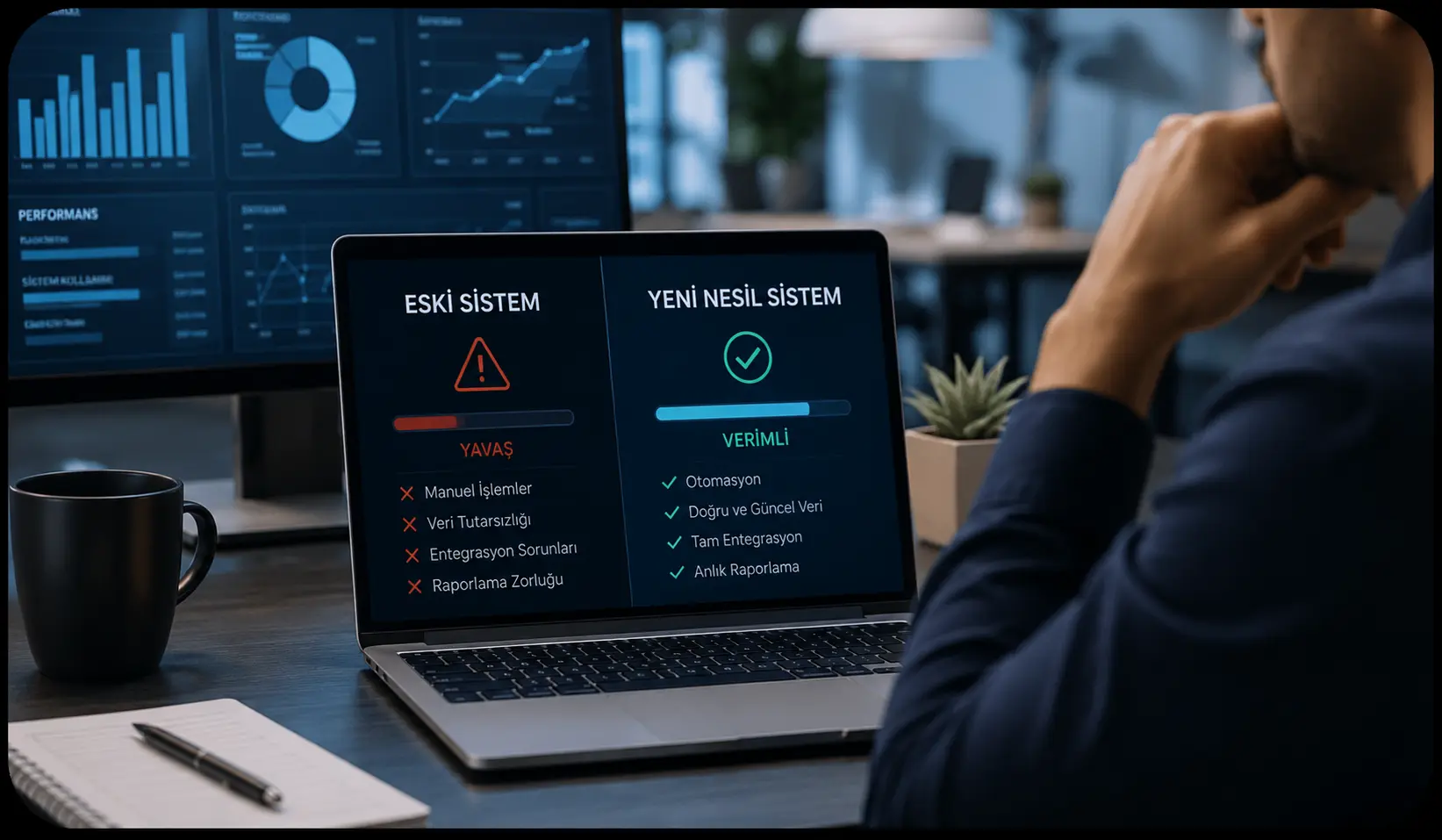


We explore RPA technology, which helps businesses operate more efficiently by automating repetitive and time-consuming processes, along with its applications and the benefits it offers to businesses.
From Repetitive Tasks to Intelligent Processes: Automating Workflows with RPA
Data entry, reporting, file verification, and email operations repeated daily in businesses can gradually become a significant workload. RPA (Robotic Process Automation) helps streamline these processes by automating rule-based tasks through software robots, enabling operations to run faster and more efficiently.
From Manual Tasks to Automated Processes
Routine tasks such as entering the same data into multiple systems, preparing regular reports, and checking files can be automated with RPA.
This allows employees to focus on more valuable tasks, such as analysis, customer relations, and strategic initiatives, rather than spending time on repetitive and time-consuming work.
Which Processes Can It Be Used In?
RPA can be particularly effective in repetitive processes that follow predefined steps.
Data entry and transfer
Excel and File Operations
Reporting
Invoice and document verification
Email classification
Information transfer between systems
The right process, the right automation
Not every process needs to be automated. To get the most out of RPA implementation, a business's existing workflows should first be analyzed to identify repetitive, time-consuming processes with clearly defined rules.
Well-planned RPA solutions can deliver time savings, reduce manual tasks, and create more streamlined workflows.
RPA can also support businesses' digital transformation processes when used alongside artificial intelligence, API integrations, and ERP and CRM systems.